
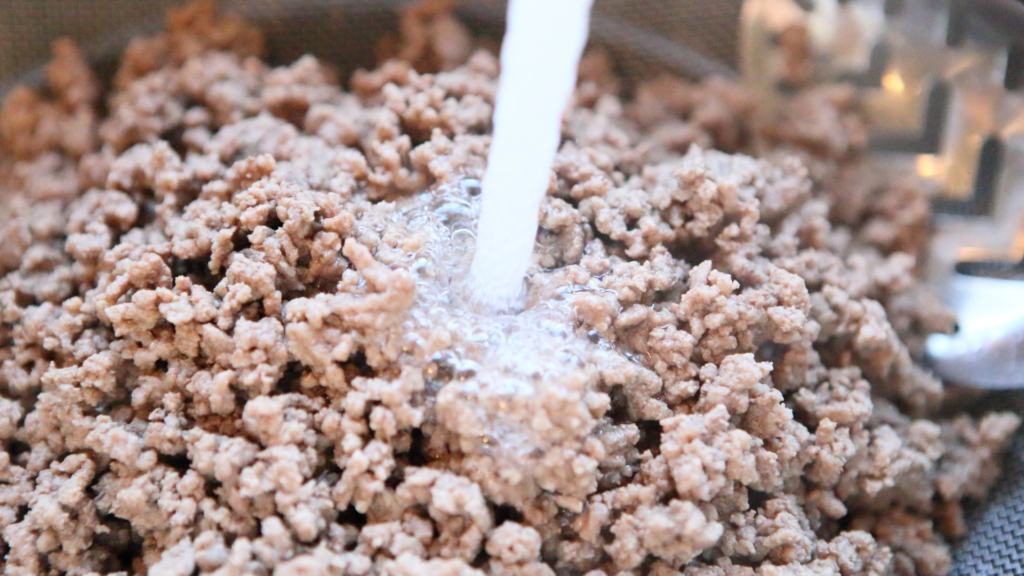
Ever found yourself staring down a package of ground beef, hand hovering over the faucet like, “Should I just rinse this off real quick?” Yeah, welcome to the club—just about everyone’s had that moment. Especially if you’re from a family where the kitchen motto was basically, “If it’s not nailed down, wash it.” Shoutout to all the grandmas out there who cleaned meat like it was going to prom.
But here’s the deal: rinsing ground beef? Not actually helping. In fact, it’s kinda making things worse. Let’s really get into it—because honestly, this is one of those things people argue about at family gatherings, right after the “should stuffing go inside the turkey” debate.
Why the Heck Do People Rinse Meat Anyway?
Let’s be real, a lot of us learned to cook from folks who came up in a different era. Back in the day, food safety rules were more like “suggestions your cousin ignored.” So, when grandma said “wash that meat or else,” you just did it. No questions.
There’s also that weird liquid in ground beef packages—looks a bit like a scene from a B-list horror movie. It’s not blood, by the way, it’s mostly water and protein, but it feels gross. That “ick” factor has convinced generations to rinse, pat, and sometimes practically bathe their meat.
Plus, foodborne illnesses are all over the news. Salmonella, E. coli, listeria—sounds like a line-up of evil comic book villains. So, it’s easy to think, “A quick rinse can’t hurt, right?” Except, actually, it can. More on that in a sec.
What the Food Safety Folks Are Yelling About
Okay, the USDA, CDC, and every food safety nerd with a lab coat is climbing onto their soapbox about this. Why? Because rinsing raw meat doesn’t kill bacteria. They don’t just slide off with a little water, like mud off your sneakers. Those suckers hang on for dear life. But what does happen? Water splashes everywhere—countertops, dish rack, weirdly, even that clean spoon you just set down.
One time, I watched a buddy try to “clean” chicken. Water went everywhere, and he didn’t realize he’d basically given his kitchen a bacteria makeover until I pointed out the splatters on his spice rack. He didn’t talk to me for a week, but hey—lesson learned.
Here’s the golden rule: Heat kills bacteria. That’s it. Not water. Not vinegar. Not some trendy TikTok hack. Get your ground beef up to 160°F (71°C if you’re rolling metric), and you’re safe. Nothing else really matters for bacteria.
What’s the Worst That Could Happen?
Let’s say you’re stubborn (or just like living dangerously) and rinse your ground beef anyway. What’s the fallout?
- The meat gets mushy. Like, the texture is all off. You were hoping for crumbles, but you get sad, soggy blobs.
- Instead of that beautiful brown, you get grey, steamed mystery meat. You know, the kind that makes tacos taste like disappointment.
- Your kitchen gets decorated in a fine mist of raw beef juice—on the floor, the counter, maybe even on the salt shaker. You’ll find it later and wonder, “What’s that sticky stuff?” Ew.
Oh, and let’s not forget the cat. Some poor Redditor shared how their roommate’s rinsing routine ended up with the family pet taking a beefy shower. I mean, if you want your cat to hate you forever, that’s one way.
And if you think you’re immune to food poisoning, let me just say: there are few things in life more humbling than a night spent hugging the toilet because you played chicken (pun intended) with kitchen hygiene.
Smarter Ways to Deal With “Gross” Beef
If your beef concerns are more about fat than germs, I got you. There are better ways:
- Drain the fat after cooking. Brown your beef, then tilt the pan and pour off the grease (into a can or jar—not your sink unless you want to fund your plumber’s vacation).
- Colander and paper towel trick. Dump the cooked beef into a colander lined with paper towels. Let gravity do the work.
- Buy leaner blends. 80/20 is classic, but if you want less fat, go 90/10 or even 96/4. Yeah, it costs more, but your arteries will thank you.
And if you’re still obsessed with rinsing, some folks do it after cooking to get rid of fat. I mean, I think it’s messy and a pain, but hey, you do you.
“But My Mom’s Done It Forever and She’s Never Been Sick!”
I hear this all the time. “But so-and-so never got sick!” Yeah, that’s what people say about eating raw cookie dough, too. Doesn’t mean it’s a great idea.
Truth is, food poisoning isn’t always immediate. Sometimes you think you’re fine, but then you’re knocked out for a weekend with “the flu.” Except it wasn’t the flu, it was that burger you made after rinsing beef on your kitchen counter. Oops.
USDA, CDC, and every cooking pro with a shred of common sense says don’t do it. At some point, you gotta trust the science, not just family tradition.
Real Talk: Skip the Sink, Save Your Dinner (and Your Sanity)
Bottom line—rinsing ground beef isn’t making your food safer or cleaner. It’s just making your life harder and your kitchen more germy. If you’re really worried, just make sure you cook it all the way through. That’s literally the best thing you can do.
So next time you’re about to bust out the colander and give your beef a bath, stop. Toss it straight in the hot pan, get that sizzle going, and let the heat do its magic. You’ll save yourself a mess, your dinner will taste way better, and your kitchen will stay a lot less sketchy.
And look, grandma was a legend, but not every kitchen hack from 1964 deserves a comeback. Keep her recipes, but maybe leave her meat-washing marathon in the past. Trust me, your stomach will appreciate it.