

Alright, time to really dig in. You want more details, more stories, more of the good stuff? Let’s go full egg-detective and spill all the secrets to banishing that stink.
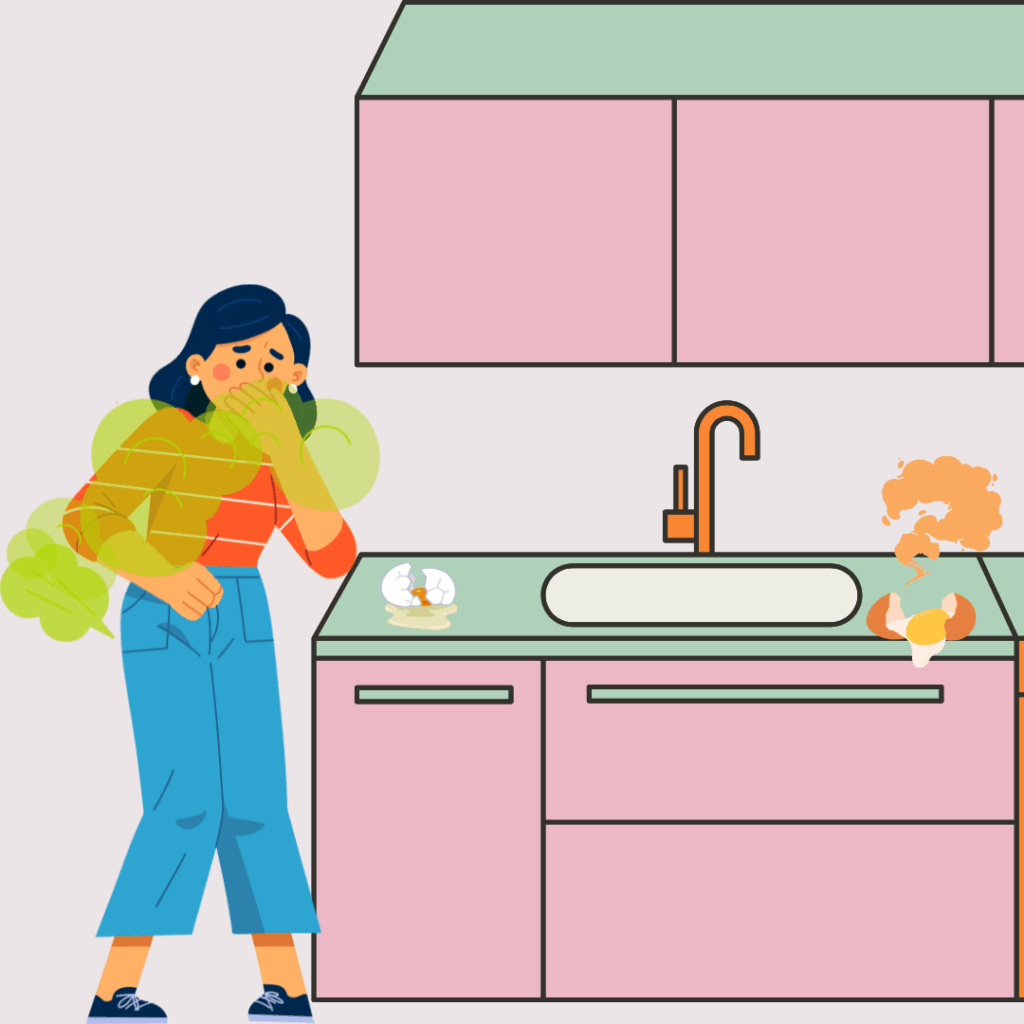
So, eggs. They’re breakfast heroes, sure, but wow, they turn on you fast. I mean, one minute you’re flipping omelets, next thing you know your kitchen smells like something crawled in the walls and died. And that smell? It’s not shy. It sticks around like a bad punchline, refusing to leave even when you’ve cleaned up everything in sight. But here’s the thing—egg stink is beatable. You just gotta outsmart it, and maybe laugh at yourself along the way.
Step 1: Track Down Every Last Bit (Don’t Trust Your Eyes Alone)
Let’s be real, most of us do the once-over and call it a day. But if you’re serious about winning this battle, you need to go borderline detective. I’m talking flashlight-in-hand, CSI-style, pulling out drawers and peeking behind stuff you haven’t cleaned since you moved in. Those eggshell shards are sneaky. They wedge themselves between the trash and the cabinet, under the microwave, even in the rubber ring of your compost bin. Miss one, and you’re doomed to days of mystery funk.
Honestly, you’d be shocked where egg bits end up. Once, I found a tiny piece stuck to the bottom of my slipper. Didn’t even realize I’d stepped in it. That was a fun surprise.
Real story: Jess (yeah, the cat lady) was about to deep-clean her whole apartment because she thought something died. All it took was fishing out that crusty eggshell. Boom—problem solved. Sometimes it’s that simple.
Step 2: Trash Duty—No Excuses
Eggs don’t wait until you’re ready. If you tossed a bad one, or even just have shells in the bin, get that trash out. Don’t do the “I’ll take it out later” thing. The smell will beat you every time. Procrastination is the egg’s best friend.
And don’t stop at just replacing the bag. Egg gunk is sneaky. It slides down the side, pools at the bottom, or soaks into the bin’s plastic. If you don’t wipe it up, you’re basically inviting the smell to hang out forever. Vinegar and water is my go-to—cheap, easy, and doesn’t smell like a chemical factory. Sometimes, if I’m feeling fancy, I’ll add a few drops of essential oil. Lavender-scented trash bin? Why not.
Pro tip: If your trash can has a lid, clean the creases and hinges. The gunk hides there, too. Learned that one the hard way after a week of sniffing around like a bloodhound.
Step 3: Attack Dirty Dishes Before They Attack You
Egg residue has this magical property—it can glue itself to pans with the force of a thousand suns. Wait too long, and you’re chiseling it off like an archaeologist. Not fun. As soon as you’re done cooking, hit those pans and bowls with some hot water. If you’re feeling lazy, at least soak ‘em so you don’t create a science experiment for later.
And don’t underestimate the power of vinegar and lemon juice. They’re like the dynamic duo of odor control. Got a particularly stubborn pan? Fill it with hot water, toss in a spoonful of baking soda, a splash of vinegar, and let it sit. You’ll thank me later.
Personal fail: My brother once left a scrambled egg skillet out for two days. TWO. DAYS. By the end, it was basically a biohazard. We almost threw the whole thing away, pan and all. Vinegar and baking soda saved the day, but barely.
Step 4: Ventilate Like Your Life Depends on It
You ever walk into your kitchen and feel like the air itself is egg-flavored? That’s what happens when you don’t get airflow going. Open every window you can. Turn on fans. Prop the door open and let the breeze do its thing. Sometimes, I’ll wave a towel around just to get the air moving faster. Hey, whatever works.
If it’s cold outside and you’re not about to freeze your toes off, get creative. Simmer a pot of water with lemon, cinnamon, or even a couple of old tea bags. The steam grabs onto the stink and drags it out the window (okay, not scientifically accurate, but it feels true). Plus, your place smells like a cozy bakery instead of a rotten egg factory.
And if you’ve got an exhaust fan, use it—don’t just let it collect dust. Run it for a good thirty minutes, even after you’re done cooking. The stink likes to hide in corners and come back when you least expect it.

Step 5: Deodorizers—Nature’s Little Helpers
Now we’re getting to the fun part. Baking soda is basically a miracle worker. Leave an open box in the kitchen, fridge, heck, even your car if you’re desperate. It soaks up bad smells and just sits there, being a hero.
Vinegar’s another classic—yeah, it smells weird at first, but give it a night and it’ll neutralize pretty much anything. Activated charcoal is next-level, especially if you’ve got soft surfaces (rugs, couches) that somehow soaked up the smell. Toss a few pouches around and let them work their black magic.
Coffee grounds are the wildcard. They don’t just cover up the smell—they eat it. Plus, your kitchen gets that “hipster café” vibe. You could even leave out a bowl of fresh grounds for guests and pretend you did it on purpose.
Family wisdom: Aunt Carol swears by a jar of baking soda with lavender oil under the sink. “It’s my secret weapon,” she says. Honestly, her kitchen always smells like a spa, so she might be onto something.
Step 6: Fridge Funk? Handle With Precision
The fridge is a whole different beast. Egg smell in there can get trapped for weeks. Start by checking every single egg—one cracked or leaky one can ruin the whole batch. Toss anything sketchy.
Wipe down every surface with a baking soda paste or diluted vinegar. Don’t forget the little shelf in the door or the egg holder—those things are like stink magnets. Leave an open box of baking soda in there (yes, another one), and if you’re feeling wild, a few slices of lemon or a cotton ball with vanilla extract. Trust me, it works.
Bonus round: Fridge still smells? Put a bowl of oats in there. Supposedly, they’re great at absorbing odors. Worst case, you wind up with slightly weird oats.
Final Thoughts: Don’t Let the Eggs Win
At the end of the day, the only way to keep egg stink at bay is to stay on top of it. Don’t wait for the smell to become a full-blown crisis. Clean as you go, keep those natural deodorizers handy, and don’t be afraid to go a little overboard with the scrubbing if you need to.
Alright, here’s the deal: if you find yourself losing the epic battle against that godawful egg smell, don’t stress. Seriously. Light a candle (or three, depending on the level of devastation), hit the room with a heavy dose of air freshener, and throw open every window you can reach—heck, prop the door open too if you have to. Then just stand there for a second, breathe it in (or out, more like), and laugh. Because, honestly, everyone’s been there. Bad eggs are practically a rite of passage for anyone who’s ever tried to cook at home. They don’t exactly warn you about this in MasterChef auditions, do they?
And here’s a little secret: kitchens have seen way worse. Remember that time you forgot about the pizza in the oven and nearly set off the smoke alarm? Or when the blender lid flew off mid-smoothie? Egg stink is just another battle scar in the wild world of home cooking. Wear it with pride.
So, when you’re prepping for brunch next time, eggs lined up like you’re about to open your own diner, don’t panic if the smell creeps in. Fast clean-up is your friend—wipe up any messes before they get the chance to bake themselves onto your counter. Crack a window for some fresh air; it does wonders. Baking soda? That stuff’s basically magic—sprinkle it in the trash, the sink, wherever. You’ll feel like a cleaning wizard. And hey, if anyone walks in and wrinkles their nose, just hit ’em with, “Yeah, we’re going for that rustic farmhouse authenticity—smells included.” Bonus points if you can keep a straight face.
Honestly, the only real mistake is letting it ruin your day. Eggs come and go, but a legendary brunch story? Now that’s something people remember.